Laser tongue- and lip-tie release, with support before and after
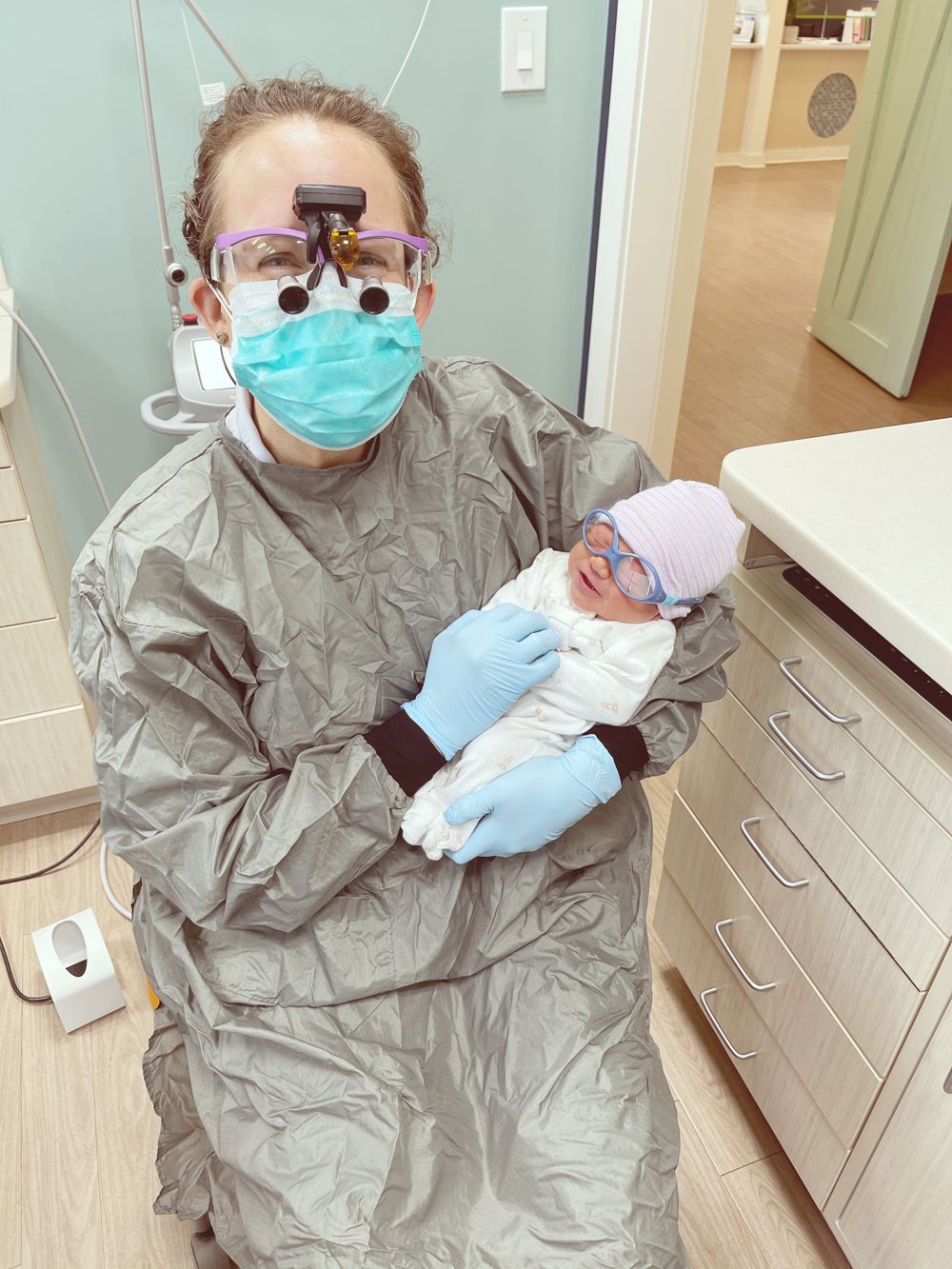
Our work with ties began with our own daughters. Today Dr. Bracy, a board-certified pediatric dentist and certified lactation counselor, evaluates and treats babies and older children with our CO2 laser, working alongside your lactation consultant and therapists.
What is a tongue- or lip-tie?
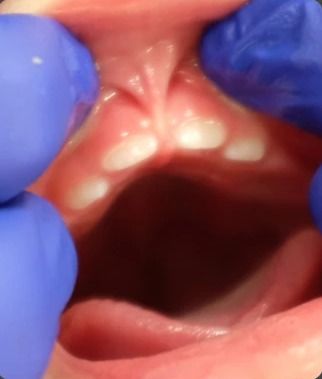
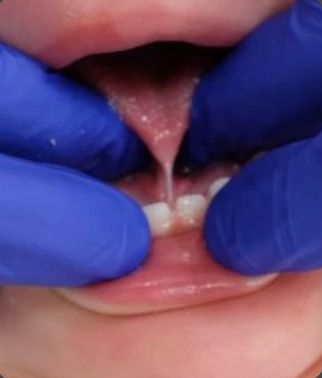
Everyone has a small band of tissue, called a frenum, connecting the tongue to the floor of the mouth and the upper lip to the gums. A tie is when that band is tight, broad, or attached in a spot that gets in the way of normal movement.
A tongue-tie can keep the tongue from creating the suction a baby needs to draw milk. Later on, it can affect speech and how a child moves food around to chew. A tight upper lip can make for a shallow latch, and in older children it can trap milk or food against the front teeth, raising the risk of cavities.
Where the tongue rests also plays a part in how the upper jaw grows and how a child breathes, which is why we look at ties as part of oral development, not only feeding.
Signs to look for
In your baby
- A poor latch — clicking, slipping off, or breaking the latch
- Swallowing air, leading to gas, fussiness, colic, or reflux
- Slow weight gain or weight loss
- Very long feeds, or falling asleep at the breast from exhaustion
- Gumming or chewing the nipple
- Trouble taking a pacifier or bottle
In you, if you're nursing
- Creased, flattened, cracked, or bleeding nipples
- Severe pain while feeding
- Plugged ducts, mastitis, or thrush
- Breasts that don't fully drain, or a dropping milk supply
Does every tie need to be treated?
No. Plenty of people have a visible tie and no trouble at all. If feeding, speech, and jaw development are going well, we simply keep an eye on it. We recommend treatment when a tie is getting in the way of feeding or speech, affecting how the jaws develop, or raising the risk of cavities.
We support every family's feeding choices, and there's no judgment here about breast, bottle, or both.
What to expect
At the consultation, Dr. Bracy examines your child, watches how the tongue and lips move, and talks through what she finds. If release makes sense, it can often be done the same day.
- A team member carries your baby to the treatment room. For laser safety, parents wait close by.
- The release itself does not take long.
- Right after the release, Dr. Bracy uses her laser for photobiomodulation, a gentle low-level light treatment to support healing.
- You're welcome to nurse or feed your baby right away, in the room where you're waiting.
- Before you leave, we show you the gentle stretches that help the area heal without reattaching, and send you home with written instructions and videos.
A release is the first step, not the whole journey. We connect families with lactation consultants, speech-language pathologists, and myofunctional therapists who help the tongue learn to move well afterward.
Watch and learn
Short videos from our office. Captions can be turned on with the CC button.
Common questions
Does Dr. Bracy treat older children?
Yes. For an older child, we usually work with a speech or myofunctional therapist before and after the release so the tongue gets the training it needs. Dr. Bracy will walk you through those steps at the consultation.
Why a laser?
The CO2 laser causes minimal to no bleeding and allows a short healing time. It's also very quick, which matters when your patient is a few weeks old.
Can I be in the room?
Laser safety rules don't allow parents in the room during the procedure itself. It's over in a few minutes, and a team member brings your baby straight back to you.
Is it covered by insurance?
Every plan is different. We'll help you find out what your plan covers before the visit so you can focus on your baby. Call or text us at 845-624-0011.
Do I need a referral?
No, though many families come to us through their lactation consultant or pediatrician. If you have one, we're glad to coordinate with them.
We'd love to meet your family
Book online in a couple of minutes, or call or text us at 845-624-0011.